

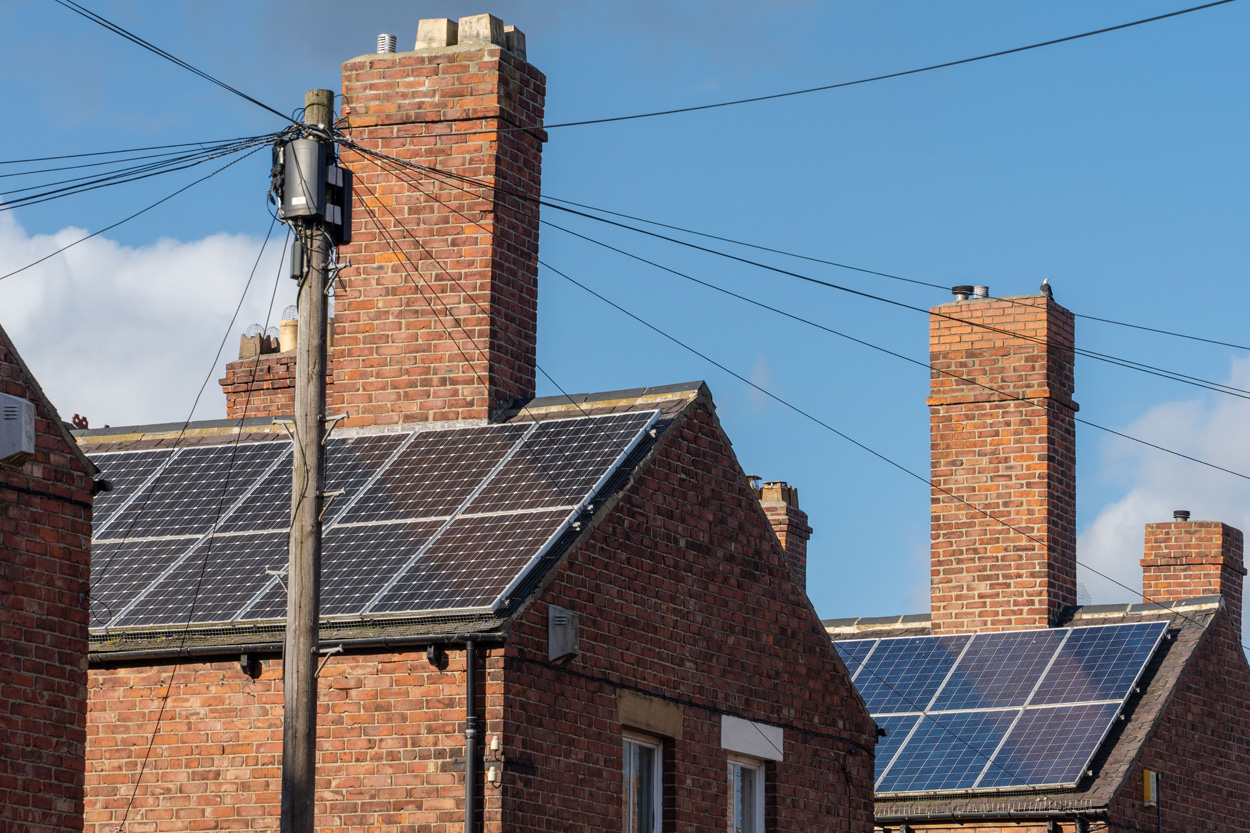
The £15bn Warm Homes Plan has been unveiled. Through the Plan, government will ‘roll out upgrades to up to five million homes’, which could potentially ‘save them hundreds on energy bills and help to lift up to a million families out of fuel poverty by 2030’. The Warm Homes Plan is a real statement of intent signalling government’s long-term commitment to housing decarbonisation and has been described as a ‘battle cry for the retrofit industry’ and a huge step forward. Here we share opinion from across the sector.
Further funding to the Warm Homes: Social Housing Fund and Local Grant schemes welcome
Matthew Scott, CIH Policy Manager for Net Zero and Sustainability, said: “A coherent, cross-tenure strategy for decarbonising our homes and making them warmer has been missing for several years. CIH therefore welcomes the landmark publication of the Warm Homes Plan, which sets out a clear vision and ambition for the future of safe, healthy housing.
“We welcome the allocation of further funding to the Warm Homes: Social Housing Fund and Local Grant schemes, the significant boost for heat network improvements, and the integration of heat resilience measures into the Government’s capital programmes — all core CIH priorities over the past two years. The plan is an important step towards giving the housing sector the clarity and certainty it needs for the future.
“We look forward the publication of more detail in the coming weeks, including on the finalisation of crucial policies for the social housing sector, and will be providing briefings for our members as soon as possible.”
Families to save in biggest home upgrade plan in British history
Ian Gregg, Chief Property Officer at Riverside, commented: “We are encouraged to see the Government taking ambitious steps to increase investment to lift families out of fuel poverty and improve household energy efficiency. It is good to get clarity and a huge step forward.
“The latest data shows that 50% of households in social rent homes are in the lowest income bracket so it is heartening to see the plan is prioritising investment towards those in most need to help to lift more people out of fuel poverty and create healthier and happier homes.
“We are committed to making sure all our homes are warm, comfortable and sustainable to help eliminate fuel poverty.
“We are the third biggest provider of the Government’s Warm Homes work and Riverside is very proud of the work we are doing where we have match-funded the Government’s investment to retrofit more than 3,000 of our homes across the Liverpool City Region, London, Greater Manchester, and Carlisle.”
Warm Homes Plan sets the direction — but delivery will be the test
As the Government unveiled its £15bn Warm Homes Plan yesterday to tackle fuel poverty across the country, the focus must now be on its effective delivery. Carl Bairstow, Director of Operations at EN:Procure, the procurement arm of specialist social housing consortium Efficiency North, said the programme could make a real difference to households most exposed to rising energy costs.
Warm Homes Plan signals long-term commitment to home decarbonisation
Derek Horrocks, Chairperson at the National Home Decarbonisation Group, said: “The National Home Decarbonisation Group (NHDG) welcomes the government’s commitment to the Warm Homes Plan, which represents a landmark moment for the retrofit sector.
“The Government’s pledge of £15bn to upgrade five million homes is an unprecedented level of investment. At a time when many households are struggling with high energy bills, this is a golden opportunity to improve the lives of millions across the country, making homes warmer, drier and healthier.
“We are particularly pleased to see the NHDG referenced by name in the plan. This recognition cements our position as a trusted government partner and reflects the unwavering commitment of our members to delivering high-quality, resident-first retrofit. We look forward to working with the rest of the supply chain including, capable, well-financed, quality-focused companies transitioning from the ECO4 scheme, to ensure that the funding reaches the households who need it most.
“We welcome the additional funding for the Warm Homes: Social Housing Fund, recognising the high-quality delivery achieved by NHDG members and others in the sector that operate on the scheme. Bringing forward additional funding from next year will be vital to support the supply chain as ECO winds down.
“We welcome the Government’s commitment to consolidate both Warm Homes schemes into a single scheme for low-income households. This will facilitate a joined-up, cross-tenure approach to tackling fuel poverty, delivering meaningful benefits to whole communities, while creating economies of scale for the retrofit supply chain. It also aligns strongly with the government’s plans to devolve retrofit funding to five new regions by 2028. NHDG members look forward to supporting this transition by working with combined authorities as delivery partners to implement cross-tenure, area-based retrofit projects that have a transformative impact across communities and regions.
“We are also pleased to see a commitment to a significant overhaul of consumer protection, and we look forward to seeing further reforms take shape. Above all, residents must be placed at the heart of the system. A strengthened and streamlined framework that embeds a culture of ‘right first time’ is crucial to safeguard residents and reduce unnecessary complexity for households and businesses. This is critical to bringing people with us on the journey to retrofit homes across the country.
“The NHDG and its members are ready to work with government and partners to ensure the Warm Homes Plan delivers on its promise, making homes warmer, healthier and more affordable for everyone. Our members have the expertise and capacity to implement the Plan effectively and responsibly. Achieving success will require not just scale, but uncompromising quality, which our members are already delivering across the retrofit sector.”
Retrofit sector welcomes Warm Homes Plan as delivery moment for UK Housing upgrade
The publication of the Government’s Warm Homes Plan marks an important moment for the retrofit sector, with the £15bn total public investment to upgrade five million homes in total. This sets out a level of ambition that reflects the scale of change needed across the UK’s existing housing stock through an area-based, mixed tenure approach. With a strong focus on affordability, social housing and targeted support for lower-income households, the plan aligns closely with the long-held view that warm and efficient homes should be a baseline standard rather than a privilege.
Gary Lawson, Managing Director at Sustainable Building Services (UK) Ltd, commented: “The Warm Homes Plan is a welcome and long-awaited commitment that recognises retrofit as essential to lowering energy bills, tackling fuel poverty and improving everyday living conditions across the UK, and building on the momentum of recent years. The vision is clearly laid out on a national scale, while keeping local delivery in mind — and high levels of ambition for specific technologies, such as the aim to triple the number of homes with solar panels to three million and expanding the heat pump market to more than 450,000 installations per year by 2030.
“The emphasis on tailored property interventions and large-scale social housing delivery is particularly encouraging, as effective retrofit must be based on what is right for each individual home and the people living in it. This is now an opportunity to reset the UK’s housing stock, but it must be approached strategically, with work that is carefully planned and delivered quickly to make a real difference to people’s homes and lives. It’s not just about making homes warmer — it’s about making them more comfortable and temperate year-round, which also improves both physical health and mental wellbeing, as well as lowering running costs. For those in low-income households or social homes, that can be completely transformational.
“The challenge now is delivery at pace and at scale through an area-based approach as we are already doing with our Warm Homes: Social Housing Fund and Local Grant schemes. That will depend on having the right skills in place, long-term certainty for those delivering the work and a continued focus on quality and fabric-first improvements alongside new technologies, supporting the additional 180,000 jobs in this sector. If delivered well, this plan could genuinely transform the state of homes across the country and be looked back on as a turning point for retrofit, creating warmer and healthier homes while easing pressure on household finances.”
The Government’s £15bn for solar and green tech — in short, great idea but you can’t put “a turbocharger on a car with a flat tyre”
Richard Dudzicki, Passivhaus expert and Founder of RDA Architects, commented: “Solar panels and heat pumps are superb technologies, and zero-interest loans and grants will certainly help more households adopt them. They can reduce bills and carbon emissions when used well, and it’s encouraging to see government support aimed at making these options more accessible. But from a building performance perspective, these technologies don’t solve the deeper problems in many homes. The reality is that a huge portion of the housing stock is leaky, poorly insulated, and thermally inefficient. Installing solar panels on a draughty, poorly insulated house is a bit like putting a turbocharger on a car with a flat tyre: the technology alone cannot make it efficient.
“The most effective way to cut energy use and bills is to improve the building fabric first. Airtightness, insulation, and better windows and doors deliver immediate, long-lasting benefits, and they amplify the impact of renewable technology. Without this ‘fabric first’ approach, solar panels and heat pumps will not achieve their full potential in terms of cost savings or carbon reduction.
“The Government’s plan is welcome for tackling the upfront cost barrier, but it risks favouring solutions that are more visible than effective. A robust programme that prioritises energy efficiency upgrades alongside new technology would be far more transformative, both for household budgets and for meeting climate targets. Renewable technology is part of the solution, but not a silver bullet. If we want genuinely low-energy homes, we need to start with the fabric of the building itself, ensuring the house can actually make the most of the tech we install.”
Marley welcomes £15bn Warm Homes Plan
Daniel Redfern, Head of Marketing Communications at Marley, said: “The announcement of the Warm Homes Plan is, of course, to be welcomed, and the £15bn allocation to support energy performance improvements to UK housing stock will play an important role in helping the UK progress towards its Net Zero ambitions.
“Designed to support the overhaul of up to five million homes through the specification of renewable technologies, including solar panels on roofscapes, the plan will further accelerate efforts to improve home energy efficiency and help lower energy bills, especially in the social housing sector.
“The investment presents a tangible opportunity for local government and the housebuilding sector to opt for proven renewable energy solutions that can help deliver energy efficient and low carbon homes for tenants, as well as new and existing homeowners.
“The roofing sector will be central to the successful delivery of the Warm Homes Plan, with solar panels acknowledged to be a primary technology solution. However, it’s now important that there is an increased focus on upskilling the existing workforce as well as attracting new talent into the industry to ensure we have the workforce in place to implement the plan at scale, both on retrofit projects and new-builds.
“We expect the Government’s financial commitment through the Warm Homes Plan will further incentivise the uptake of proven technologies that can help transform the energy efficiency performance of UK homes for the long term. As such, product supply will be central to the plan’s successful implementation, and it’s important that those specifying solar panels are choosing high quality solutions to ensure long-term performance. Marley has led the way by providing a fully roof integrated solar panel solution — Marley SolarTile — designed specifically for pitched roofs, and available as part of a wider single source renewable technology package that includes connected battery storage and inverters.
“As more details around the plan are announced in due course, we look forward to working with those across the construction industry to play our part in ensuring its successful delivery.”
Following the end of ECO scheme, Warm Homes Plan welcome news hour social housing providers
Dave Woodward is the Key Account Director of the Social Housing team at Wolseley Plumb Centre, commented: “Following the recent end of the ECO scheme, the Government’s Warm Homes Plan is welcome news for social housing providers. With up to five million homes set for improvements by 2030, and over £5bn earmarked for low-income households, providers now have clear funding and support to improve the energy efficiency of their properties.
“These upgrades will not only help providers meet EPC C standards and reduce carbon emissions, but also tackle fuel poverty by making homes warmer and energy bills more affordable for tenants.”
Warm Homes Plan will accelerate progress to net zero, however, government must take steps to reduce price of electricity
Hamid Salimi, Head of Residential Products at Daikin, said: “The Warm Homes Plan will accelerate progress towards net zero. It will make it cheaper to install and run low carbon heating, making heat pumps even more attractive, particularly when they are paired with solar PV and battery technologies. The ability to apply for a low or zero interest loan on-top of the Boiler Upgrade Scheme (BUS) grant is particularly welcome, as it will encourage more householders to invest in this technology. As hotter climate conditions become an increasing issue in the UK, we welcome BUS funding being extended to air-to-air heat pumps that can cool as well as heat homes.
“We also welcome the plan’s fully funded upgrades for low‑income households, helping ensure the shift to cleaner heating is fair and accessible for all.
“We would, however, urge the government to take early and decisive steps to reduce the price of electricity. This remains a barrier to the electrification of domestic, commercial and industrial heating.”
Breakthrough the industry has been waiting for
Nigel Pocklington, CEO at clean energy provider Good Energy, commented: “This is the breakthrough the industry has been waiting for. Most households want to make greener energy choices, but the first hurdle is the upfront cost. That’s why the Warm Homes Plan is a welcome step towards making comfortable, renewable-powered homes more achievable.
“Done well, efficient and well-insulated homes powered by clean energy can cut bills and reduce emissions, while supporting a more flexible and resilient energy system. However, funding will need to be at scale to truly make a difference to the Government’s net zero targets, with an application process that doesn’t put people off with complex jargon.”
The scrapping of EC04 created understandable uncertainty
Stuart Hesk, an expert in heating and renewable energy solutions and Director of Heating, at Hewer Facilities Management Ltd, one of the South West’s leading heating, renewables and plumbing specialists, said: “While the ambition is welcome, the industry is still waiting for the finer operational details. Clarity around funding mechanisms, eligibility and delivery timelines will be critical if contractors are to mobilise at the scale required. The scrapping of EC04 created understandable uncertainty, so confidence will depend on how clearly this programme is defined and sustained. The target of upgrading five million homes is undoubtedly ambitious, but having a clear goal is important.
“We believe it is achievable provided the programme is maintained across parliamentary terms and backed by long-term policy stability. The continued support of the BUS grant is particularly reassuring, as it gives businesses just like ours the confidence to invest in skills, training, and new jobs to support the low carbon transition.
“Overall, this plan signals that the Government is validating its commitment to decarbonisation, and with the right detail and long-term backing it could represent a significant opportunity for households, social housing providers, and the wider industry.”
On affordability
“The Warm Homes Plan is a positive and much needed step for households struggling with high energy bills and highlights the Government’s continued commitment to decarbonising the UK’s housing stock. Supporting low-income households and social housing residents at scale has the potential to deliver real, long-term benefits in comfort, affordability, and carbon reduction.
“We are encouraged by the focus on making clean energy technologies more accessible. We are already working to make retrofit heat pump solutions affordable within the BUS grant, helping to bring installation costs to a level that can compete with, or even undercut, traditional gas boiler replacements. When combined with solar PV and battery storage, these solutions can deliver significant reductions in energy bills for homeowners and social landlords alike.
The Warmer Homes Plan misses a key opportunity: Homes can earn from the Grid
Levelise says: “The Warmer Homes Plan rightly focuses on reducing energy use and lowering bills, but it misses a bigger opportunity: helping households understand their role in a changing energy system, and how they can earn money from the grid. As homes install batteries, heat pumps, and solar, they are no longer passive energy consumers, yet policy and public debate haven’t caught up with this reality.
“The Government signals genuine commitment, but execution matters. Subsidising hardware alone risks a missed opportunity to cut bills, support the grid, and integrate renewables. Levelise has delivered exactly this outcome through energy flexibility, paying over £2m directly to more than 5,500 customers by trading their battery storage across energy markets. This shows how households can actively participate in the energy system, reduce costs, and generate income. Without this step, much of the potential value from home energy upgrades goes unused.
“Installing solar panels and batteries is just the start. The real test is building the infrastructure to make every home an active participant in Britain’s energy transition, delivering zero bills as a market-enabled reality.”
£15bn Warm Homes Plan tackles energy bills at the root
Ren Yi Hooi, CEO and Founder at Lightning Reach commented: “The Warm Homes Plan is one of the most significant signals yet that the government is serious about tackling high energy bills at the root cause, not just through short-term support. Investment in insulation, heat pumps and solar has the potential to permanently lower costs for households and prevent financially vulnerable families from being left behind as the energy system transitions.
“But ambition alone doesn’t deliver impact. Time and time again we’ve seen that complex eligibility rules and fragmented delivery can stop support from reaching the people who need it most. The creation of a Warm Homes Agency is a strong step forward, but real success will depend on whether the scheme is communicated clearly and delivered simply, so households can understand what they’re entitled to and access it without friction.”
£1bn government plan to begin doubling the amount of heat demand met by heat networks — however much greater investment will be needed
Tom Naughton, Chief Operating Officer of FairHeat, said: “It’s great to see the Government placing their faith in heat networks and allocating them such a prominent role in the creation and delivery of the Warm Homes Plan.
“We’re particularly pleased with the target to more than double the amount of heat demand met by heat networks in England to 7% by 2035. This new target is an important milestone on the journey to net zero and the path to delivering better energy security for the UK.
“We’re pleased to see the Warm Homes Plan allocate £1bn to heat networks over the next five years. This on-going commitment is essential to making the UK one of the fastest growing heat network markets in Europe.
“This overall funding package is a good start. However, to meet the incoming regulations and the energy security ambitions and net zero targets of successive governments we think much greater investment will be needed, particularly for upgrading existing heat networks, which is one of the biggest challenges facing social landlords.
“Ofgem estimates that 66% of the UK’s estimated 15,000 existing heat networks are owned and managed by social landlords — equivalent to around 10,000 heat networks. We will continue to make the case about the need for greater investment to bring these existing heat networks up to scratch.
“With regards to delivering new heat networks we are concerned to note that as yet there is no update on the loss of Public Sector Decarbonisation Scheme (PSDS) funding, which is key for connecting public sector building to heat networks, and what that funding will be replaced by.”
Header image: Hazel Plater/Wirestock Creators AdobeStock