
 Caroline Compton-James, Deputy Chief Executive at SCAPE, highlights the importance of homing in on social value through housing delivery.
The UK construction sector is at a pivotal moment while it navigates economic headwinds and evolving expectations around housing delivery. With ambitious targets under review, the industry is striving to deliver meaningful social value alongside essential infrastructure, even as it contends with skills shortages and the shifting landscape of modern construction practices.
Central to this evolution is the role of procurement. Under the Procurement Act 2023, public sector commissioning is required to maximise economic, social and environmental benefits. Far from being a bureaucratic hurdle, procurement has become a strategic lever for prioritising local and regional priorities, encompassing public benefit and wider social impact, allowing flexibility in social value weighting.
SCAPE’s Social Value in Construction Benchmarking Report 2025 highlights this shift. In 2024, £1.2bn in social value was generated across 418 projects, representing 27.3% of added value. The average project size rose 9% to £10.5m, with social value spending reaching a record £1.17bn. Local job creation and community spending accounted for 27% of contract value.
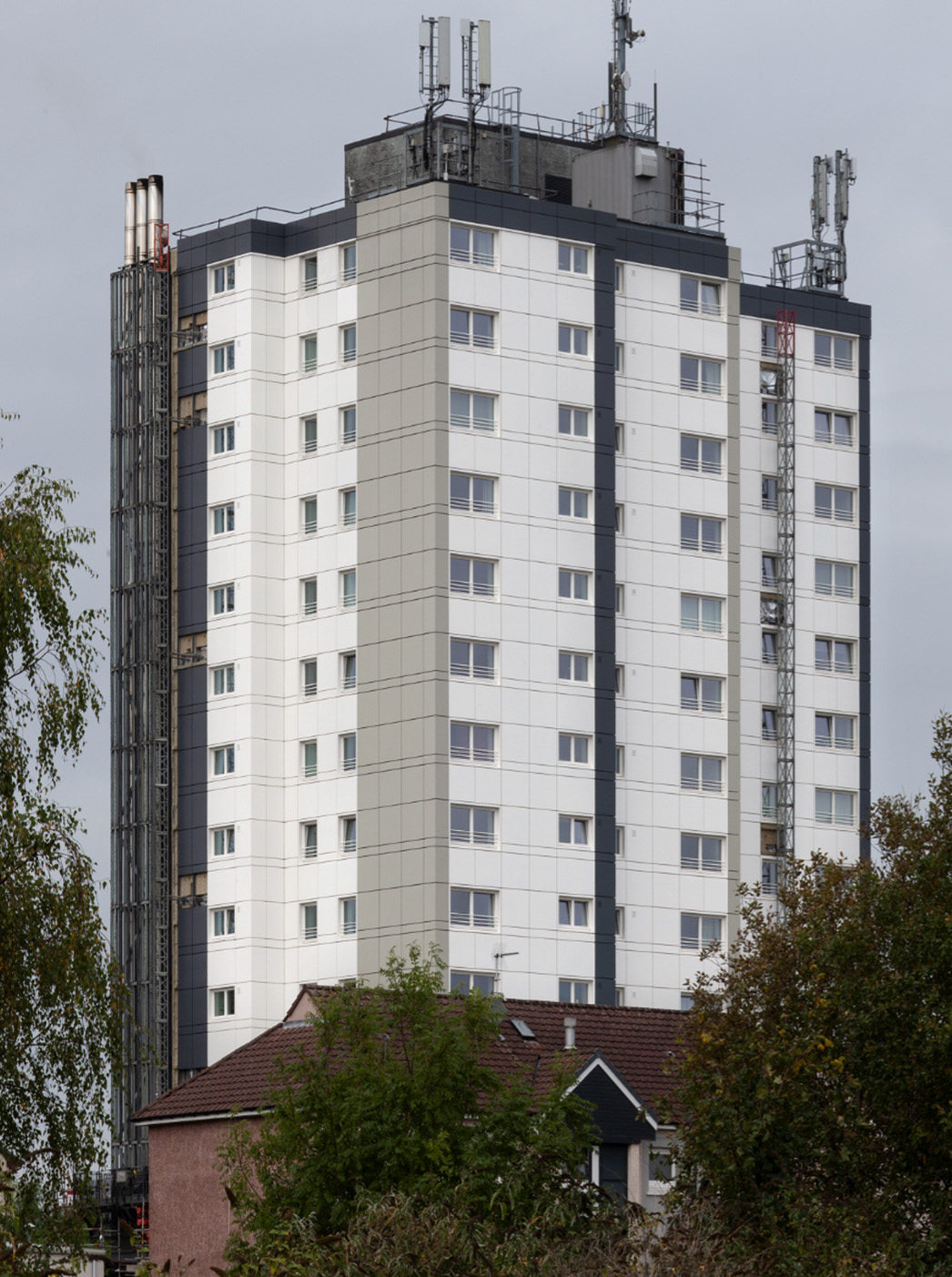
Housing schemes are a key driver of this impact. A standout example is Prospecthill Court in Greenock, Scotland. Delivered by Kier via the SCAPE Scotland Construction framework for River Clyde Homes, the £6m retrofit of 90 homes in a high-rise block achieved the Association for Environment Conscious Building standard. Energy demand per flat dropped by 80%, from 16,750 kWh/year to 2,680 kWh, significantly reducing carbon emissions and heating costs. The project won the Net Zero in Housing award at the CIH Housing Awards.
Community engagement was a cornerstone of the retrofit project, with residents actively involved through consultations and open days. Beyond the build itself, the project team spearheaded a range of local initiatives — organising clean-up days, hosting arts sessions for children, furnishing a respite flat and contributing to the Inverclyde Foodbank — all aimed at strengthening community ties and promoting wellbeing.
Local spend
This grassroots impact is illustrated in our Social Value Benchmarking Report. Last year alone, the report shows that local spend rose by 65% to exceed £1 billion. Notably, 98p of every £1 invested in social value directly supports local jobs and businesses. This figure has remained consistently high, underscoring the tangible benefits of socially conscious procurement.
This momentum is driven by stronger collaboration between contractors and local suppliers, alongside a growing emphasis from clients on building resilient, locally rooted supply chains. Supporting the local economy is no longer a peripheral goal; it is now closely linked with improving procurement tools to identify the right partners and deliver lasting impact.
The rise in local and small business spending further underscores the sector’s commitment to community investment. With social value increasingly embedded in both legislation and procurement strategy, the construction industry is well positioned for continued growth in delivering meaningful outcomes beyond the build.
For local authorities, the opportunity is clear: procurement is a powerful tool not only for delivering housing infrastructure, but also for driving improvements in employment, economic resilience and community wellbeing. By embedding social value into housing projects, councils can ensure that each development contributes meaningfully to the lives of residents. As demonstrated by initiatives like Prospecthill Court, socially conscious procurement enables housing schemes to deliver long-term impact extending far beyond the construction site, helping to build more resilient, inclusive communities.
Header image: Prospecthill Court in Greenock, Scotland. Photo credit Kier.