 Karbon Homes’ Group Executive Director of Development and Asset Management, Sarah Robson, sets out the organisation’s plans for a more sustainable future.
With the least energy-efficient housing in Europe, carbon emissions from homes account for almost 17% of the UK’s total emissions. Around 4.5 million UK homes are owned and managed by the social housing sector, meaning the pressure is on for local authorities and registered providers to decarbonise their homes.
Karbon Homes, a registered provider with over 34,000 homes across the North East and Yorkshire, is no exception, and with homes accounting for around a quarter of all the North of England’s carbon emissions, the organisation has ambitious plans when it comes to its road map to reaching net zero.
Lowering the carbon footprint of our homes and operations, whilst also positively impacting the lives of customers. That’s the ethos of Karbon’s ‘Response to Climate Change’ strategy, which outlines our journey to reaching net zero and how we can implement positive changes to reduce emissions and become more energy-efficient.
Housing investment
Varying in size, style of construction and age, and located across a diverse geographical footprint, we’re faced with a significant challenge when it comes to getting our existing homes to net zero. The predicted investment needed to achieve this is £655m, an average cost per property of £24,000.
At present, 80% of our existing homes achieve an Energy Performance Certificate rating of C or above.
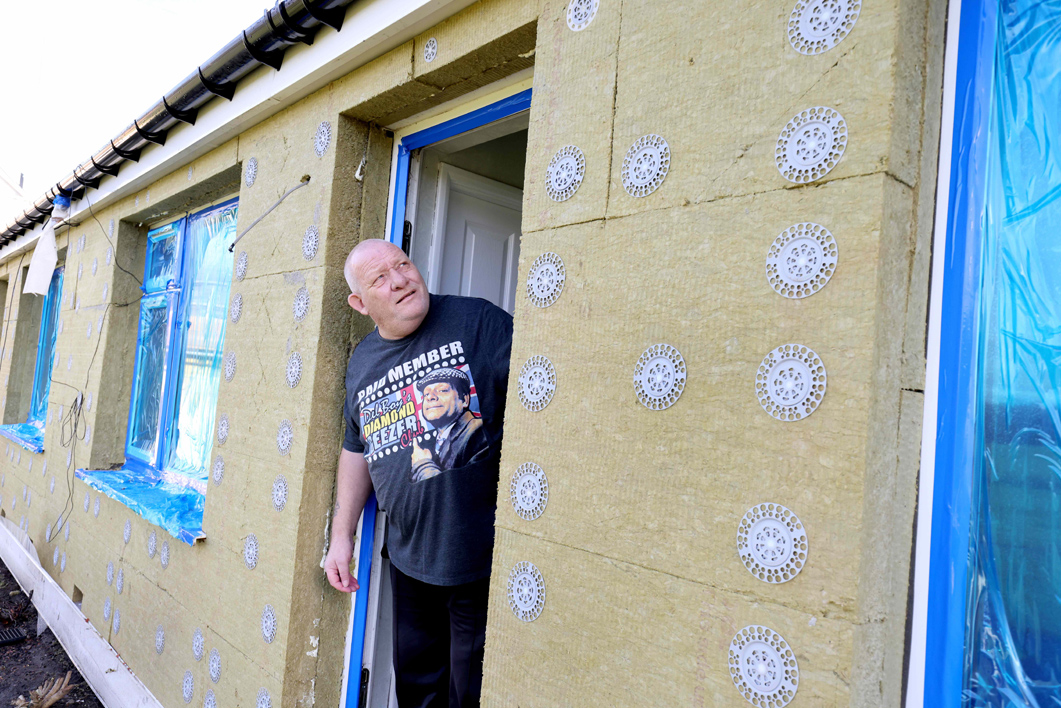
For our older, less energy-efficient homes and buildings, investments to get them up to at least an EPC C, which we are required to do by law before 2030, have varied from smaller measures such as switching to LED lighting in communal areas and fitting smart meters in homes, to more major works including upgrades of inefficient heating systems, installation of cavity wall and loft insulation, and the implementation of renewable energy technologies, including air source heat pumps and solar panels.
There’s still a significant investment of over £21m needed to bring that remaining 20% up to that EPC target, an average of £3,000+ per home.
Funding from the Government’s Department for Energy Security and Net Zero is vital in us achieving this and we began this new financial year with another welcomed grant of £1.8m from the Warm Homes Social Housing Fund.
Standard assessment procedure changes
Previously we’ve focused on bringing our hardest to treat properties up to EPC C first, but recent changes to methodologies are having a cost impact.
In the summer next year, amendments are being made to the standard assessment procedure used to measure the energy efficiency of our homes, and these amendments have the potential to add about £15m of cost to our EPC C work between now and 2030, which is a very significant increase so late in the day. So, we are having to be innovative in how we manage this and we will also be proactively seeking out additional grant funding.
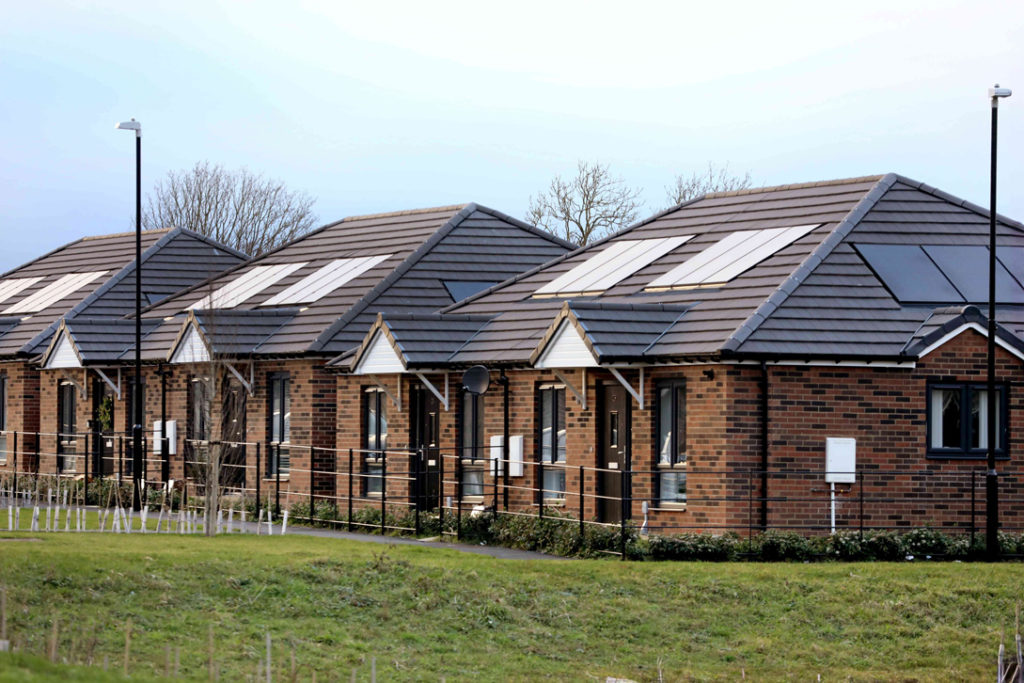
For the new homes we build, we aim to achieve EPC A or B as standard and according to a UK survey on housing association builders for the 24/25 financial year, we built the fourth highest number of EPC A homes last year. We’re also trying where possible to build homes to net zero standard.
To achieve this, we take a ‘fabric first’ investment approach to design, specification and methods of construction. This ensures the efficiency of the initial fabric of each of our new homes is optimised and then, depending on the location and the specifics of the site, additional measures and technologies are incorporated, to proof them for the future.
 Harnessing natural resources
An example of this in action is an innovative project we’re delivering in partnership with Durham County Council and the Mining Remediation Authority, at the new Seaham Garden Village in County Durham.
We’re building 750 affordable homes at the site, half of the village’s total homes, all of these homes will be connected to a new, ultra-low carbon district heat network powered by naturally occurring mine water.
The system will harness the mine water, which is currently extracted from the former mine shafts to protect the groundwater aquifer which provides drinking water to local households, treated to remove heavy metals, and then discharged out to sea.
Due to its geothermal energy the water in the mine shafts sits at 19-20 degrees throughout the year, so rather than allowing that heat to simply dissipate into the atmosphere on extraction, the system will extract the heat from the water, put it through a heat exchange to increase the water temperature further, and then send it to the homes through a new pipe network.
Adding an additional step into an existing system to harness this fantastic natural resource for sustainable heating feels like a no-brainer. And when paired with a range of energy efficiency technologies, like solar PV panels with battery storage, these new homes will be well on their way to being net zero and they will also be cheaper to heat for customers.
Yes, these investments are crucial to ensure we play our role in lowering carbon emissions and making environmental improvements, but equally these investments are key in helping us achieve our overall mission, to provide our customers with ‘strong foundations for life’, helping them to thrive.
 Customer Environment Group
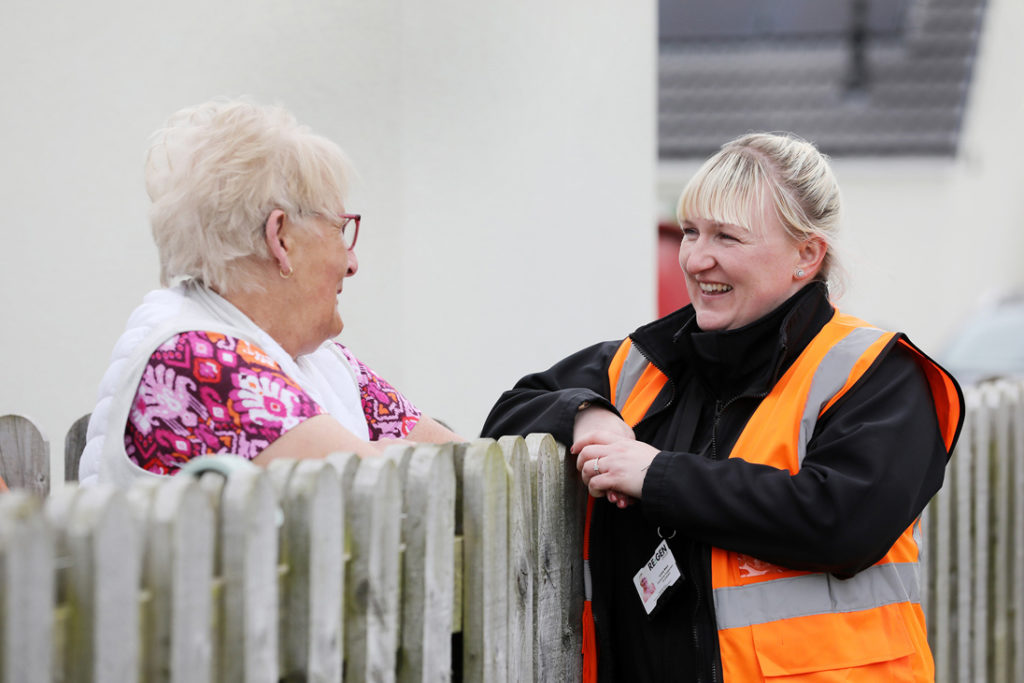
By improving the energy efficiency of our homes we’re providing warm and affordable heat to run homes, and customers arguably have the greatest stake in us getting these decisions right. For that reason, we’re ensuring we bring our customers on the journey with us, giving them the chance to have their say on our approach to the environment and climate change and ensure we are focusing on environmental issues affecting them.
One of the ways we’re doing this is through our Customer Environment Group. Customers involved have played an important role in the development of our strategy and helped guide us on our customer communications around the topic.
Our approach to resident engagement scored very highly in our latest SHIFT assessment, the housing sector’s leading sustainability standard which outlines how organisations are delivering against challenging environmental targets.
This year we were awarded the Gold accreditation, ranking 6th out of 40 recent assessments for comparable housing associations.
This achievement affirms that the work we’re putting in is making an impact, however there’s still a long way to go on our journey and we’re committed to making further improvements and changes, both for the benefit of the environment and our customers.
And not just on our homes but also on our responsible sourcing of materials, reduction in diesel use, waste management practices and improvement of biodiversity in our communities.
Overall, we are focused on providing homes that are cheaper to run for customers and that are less impactful on the environment.