


 As the Warm Homes Plan moves from ambition to delivery, social landlords across the UK are grappling with the same question: how do we deliver retrofit at scale without compromising resident experience, technical quality, or programme governance?
 The answer lies in the lessons learned from organisations that have already delivered large-scale, multi-measure programmes across hundreds of property archetypes, local authority areas and resident needs.
Charlie Mullan, Managing Director of Warmer Energy Solutions, a leading retrofit delivery partner who has delivered more than 8,000 full-property retrofits and over 26,000 individual measures for local authorities, housing providers and obligated suppliers, shares the five critical lessons he learnt that others could learn from.
1. Retrofit is a technical discipline, not an installation exercise
The biggest misconception in the decarbonisation sector is that retrofitting is simply installing heat pumps, solar panels, or insulation. It isn’t. It is a technical engineering discipline requiring structured assessment, tailored design, coordinated sequencing and ongoing evaluation.
PAS2035 has formalised this, but compliance alone isn’t enough. To achieve consistency, we learned early on that we needed a fully in-house professional team spanning:
- Retrofit Assessors
- Retrofit Designers (MCIOB & ARB registered)
- Retrofit Coordinators (L5 qualified)
- Retrofit Evaluators
This end-to-end control significantly reduces risk and ensures designs are compatible, moisture-safe and sequenced in the right order. It is also the only way to guarantee that technologies like ASHP, PV or insulation interact correctly with each other and the building fabric, vital for remaining compliant with Awaab’s Law and preventing unintended consequences like damp and mould.
When landlords ask why some installations fail or underperform, the cause is almost always upstream: incorrect assumptions, incomplete assessment, or missing design expertise.
2. Large programmes must be built around property archetypes and geography
Retrofit cannot be scheduled like responsive repairs. Trying to deliver multi-measure upgrades in a run-sheet order (1, 2, 3, 4) is a guarantee of inefficiency, delays and complaints.
We recommend grouping homes by:
- Archetype
- Fabric characteristics
- Existing heating type
- Ventilation risk
- Geographical proximity
This creates “clusters” that can be delivered with maximum productivity and minimum disruption. It also means supply chains can be aligned more effectively and installers can specialise in predictable property types, improving both speed and quality.
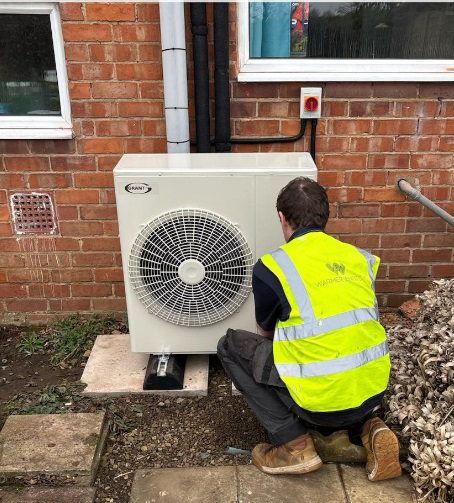
For example, our ASHP programme with Powys County Council has efficiently delivered 292 installations since June 2025 because properties were grouped by heat loss profile and radiator upgrade needs, enabling predictable sequencing of internal and external works.
3. Resident experience is a technical risk factor, and the biggest determinant of programme success
Every major programme we’ve delivered has reinforced the same truth: If residents are anxious, unavailable, unprepared or unclear on what will happen, technical success is at risk.
This is why dedicated resident liaison and support is vital across every step of the retrofit journey, from survey, assessment, and installation phase. Having this support in place:
- Prepares residents for disruption and manages expectations
- Helps with real-time problem solving to address concerns early
- Supports vulnerable households
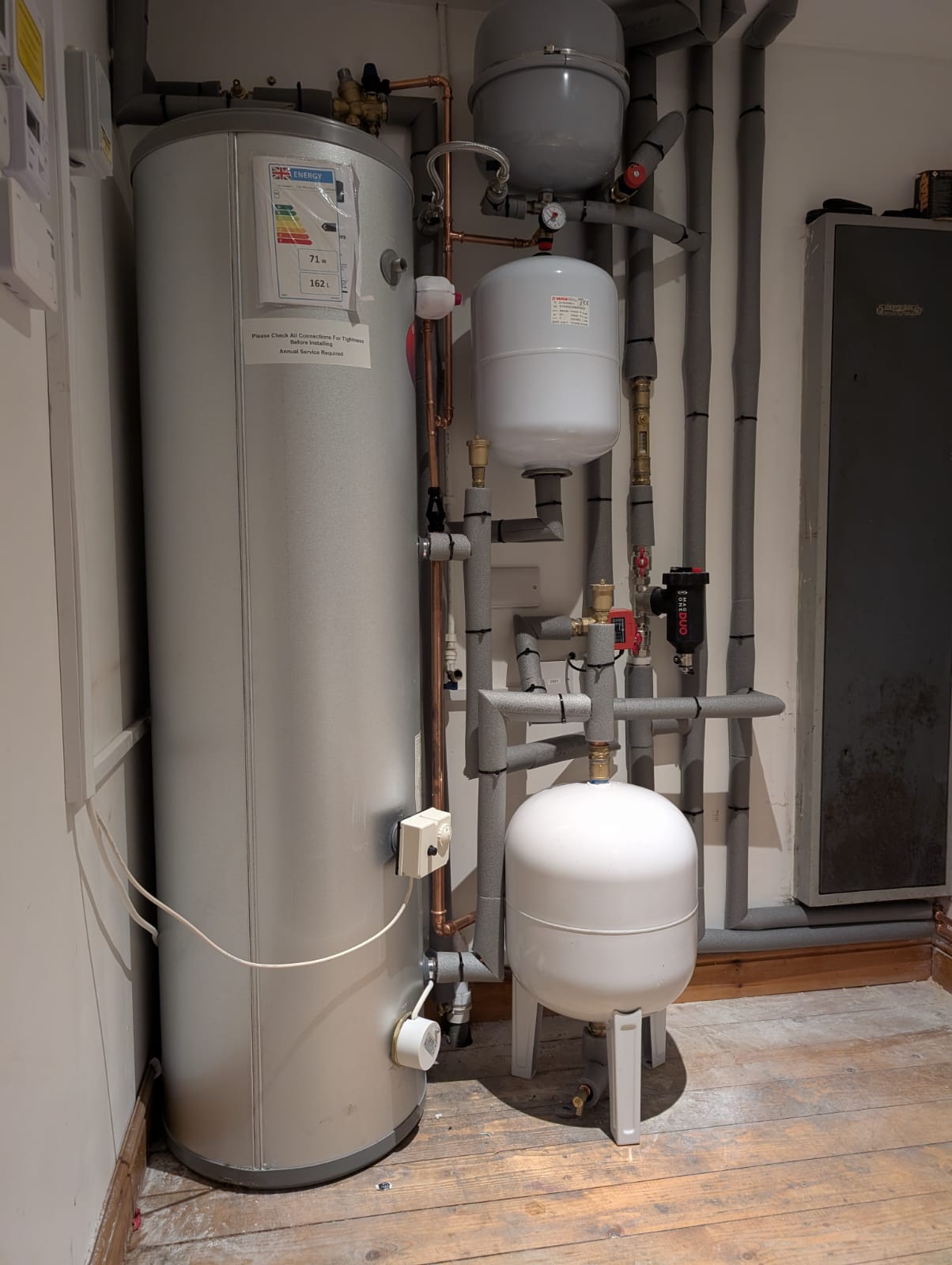
- Ensures access to lofts, boiler cupboards, and external areas is safe for contractors and residents alike
A technically perfect design will still fail if the resident journey is poor. The opposite is also true: a resident-first approach smooths delivery and builds long-term trust between tenants, their landlords and delivery partners.
 4. Quality assurance needs to be intrusive, not decorative
Social landlords should expect to see high levels of internal QA inspections, supported by independent technical monitoring with findings and outcomes reported on regularly to ensure continuous improvement.
These are not “nice to haves”, they are fundamental to reducing future risk, ensuring compliance, and protecting organisations from audit exposure.
At Warmer, we adopted a model of independently auditing every single one of our installations right from the start. This wasn’t a funding requirement, it was the right thing to do, because we know that mistakes can happen, and contractors need to be proactive to provide assurance for residents and clients that the retrofit journey will deliver the positive impacts that it promises.
5. Whole-house retrofit delivers the best outcomes when technology choice is flexible
One of the most important lessons is that choice matters. Because not every technology is suitable for every household.
A recent example in north Wales saw a property with no central heating system be eligible for a fully funded heat pump but requiring internal or external wall insulation to operate efficiently. The resident opted instead for a full-house gas central heating system, ventilation upgrade and loft insulation because it caused less disruption. This improved:
- Thermal comfort
- Home health
- EPC performance
- Long-term running costs
Residents’ desires and wishes should always be incorporated into the design wherever possible.
The future for Warm Homes delivery
The next five years will see unprecedented investment in domestic retrofit, with more than £13bn committed by the UK Government to supporting the adoption of low-carbon heating technologies and the rollout of renewable energy solutions.
The challenge is not about how to deliver at volume; it is about how to deliver quality at volume. But the good news is that this is not only possible, but achievable today.
The landlords who succeed will be the ones who partner with organisations capable of delivering multi-measure, PAS2035-compliant programmes, supported by rigorous quality assurance frameworks, and with resident involvement central to their delivery programme.