As local authorities and housing associations face mounting pressure to meet ambitious sustainability targets, retrofitting bathrooms has become a key focus. As multigenerational living becomes more popular, however, the drive for enhanced efficiency could risk overlooking the diverse needs of tenants. Karen Wise, Head of Product Management at Triton Showers, explores how the retrofit process can — and must — find the perfect balance.
It’s an unprecedented time for the social housing sector. While the Future Homes Standard (FHS) has been hanging over heads for more than six years now, final regulations are (finally) set to be announced in early 2026. Yet, a lack of clarity around specific directives up to now — and possibly for a few more months — has left many providers in the challenging position of preparing for the unknown.
One thing, however, is clear — new homes must be built with a 75-80% reduction in carbon emissions compared to those constructed under 2013 legislation.[1] Although the standard is primarily centred around new-builds, it will indirectly affect existing housing stock by creating a benchmark that retrofit projects will be expected to match.
It’s therefore likely that energy-saving measures — no matter how incremental — will be prioritised by social housing providers under pressure to align with the UK’s broader net zero goals. While this is a sensible and correct approach, it’s crucial that considerations like inclusivity are not overlooked in the process.
A new norm
Multigenerational living is on the rise.[2] Regardless of demographic, costs seem to be rising for everybody. Soaring house prices have made it extremely difficult for prospective first-time buyers to get on the property ladder, while the older generation are struggling to afford rising care home fees. The result? People of all ages under the same roof.
This means that, where possible, social housing retrofit projects must be planned with accessibility in mind. As an area where both important energy savings can be made and slips and falls are a risk for the less mobile, the bathroom is the perfect starting place for those looking to balance efficiency with inclusivity.
As the largest domestic consumer of water and responsible for half of hot water demand generated, specifying the right shower is an important piece of the puzzle, and there are several considerations that should be made when doing so.
The great shower debate
The first — and most obvious — point of call is whether to choose an electric or a mixer. Drawing from both hot and cold water supplies, mixers tend to offer a more powerful flow rate than their electric counterparts. On the other hand, they rely on the availability of stored or combi-generated water, which may not be consistent across older housing stock. In multigenerational households, where simultaneous water use is common, pressure balancing may also be an issue.
Electric showers, meanwhile, are lauded for their energy efficiency, delivering instant hot water without heating an entire tank. This makes them a particularly attractive choice for retrofit projects where decarbonisation is a priority.
Their independence from a central boiler also means they offer greater reliability, and those with thermostatic controls add an extra layer of safety by maintaining a consistent temperature, even when demand fluctuates elsewhere in the home. This is important for multigenerational households where vulnerable residents may be more susceptible to sudden temperature changes.
Safe specification
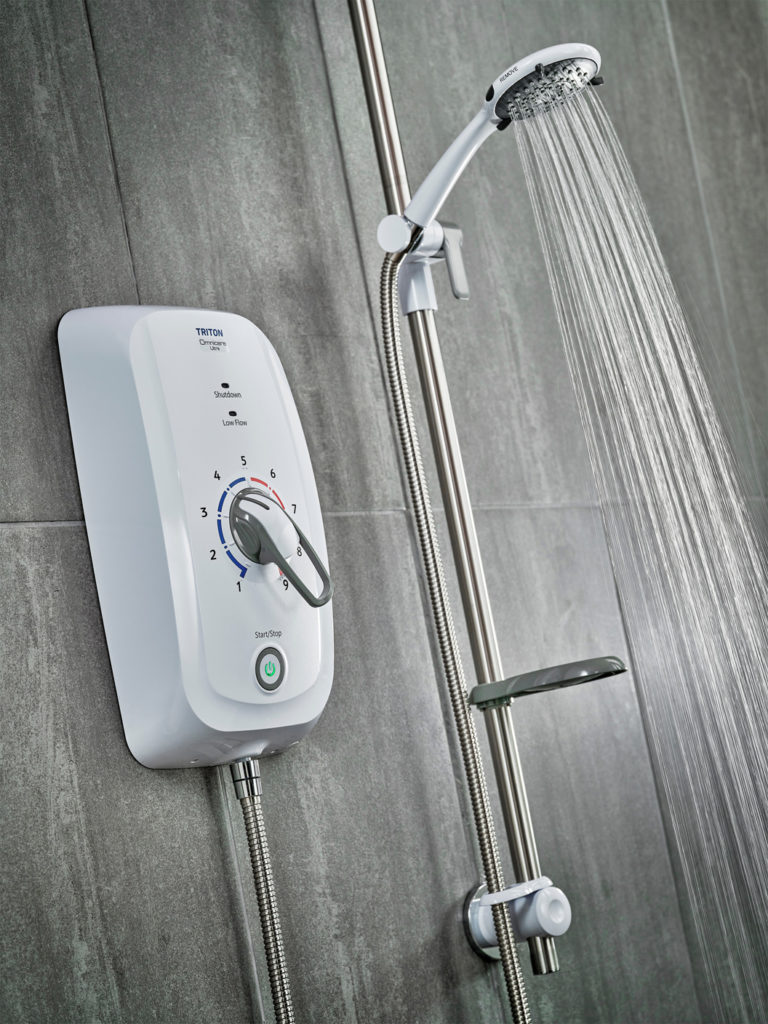
Care showers promote safety, comfort and independence through a handful of features, including easy-to-use controls, thermostatic temperature regulation and compatibility with accessories like grab rails. An electric care shower enables residents to shower safely, while everybody benefits from efficient water use and lower bills.
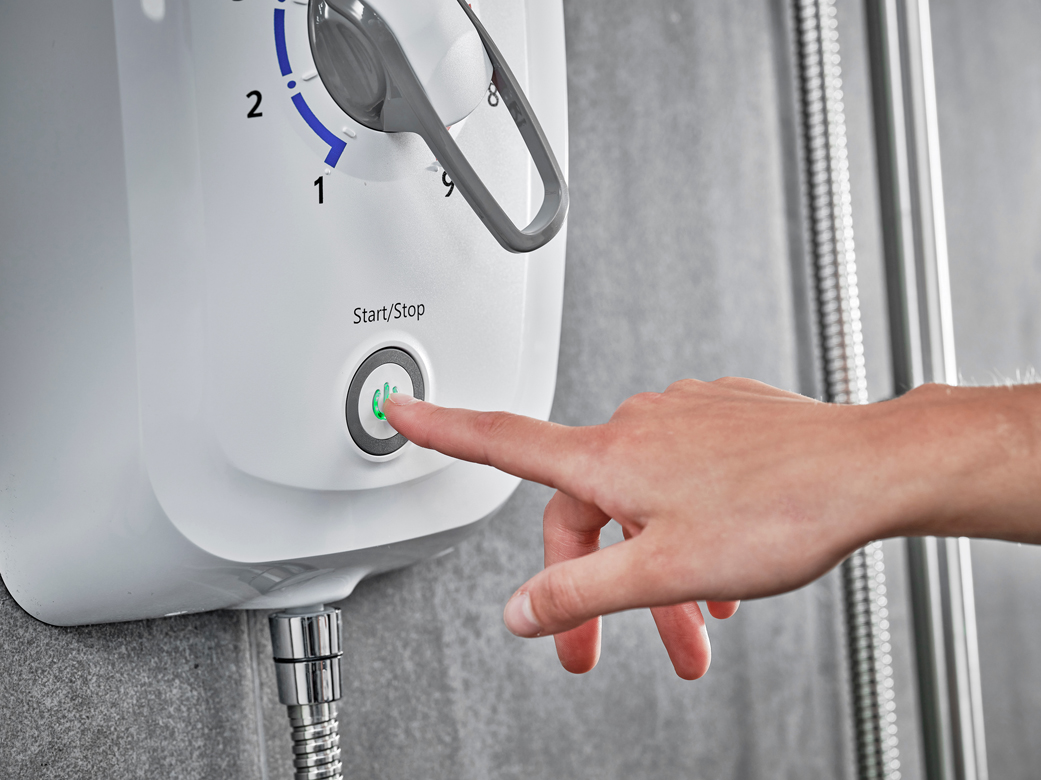
Triton’s Omnicare range of electric showers provides households with an inclusive solution. Each model is operated with a soft press of the appliance’s start/stop button, followed by a ‘power on’ illumination for further reassurance. With an extended riser rail and two-metre anti-twist hose, Omnicare has been manufactured to assist users when standing or seated.
Assurance through accreditation
When selecting products for retrofit projects, those with third-party accreditations offer an assurance of quality and compliance. The Omnicare range features thermostatic temperature controls, accredited with a BEAB Care Mark, to prevent sudden drops in water temperature, regulating within +/- 1°C through its unique Tri-Therm feature.
The Elina bar mixer shower is another inclusively designed solution, offering Type 3 (TMV) approval and KIWA UK Reg 4 certification for compliance with water supply regulations. It features tamper-proof looped lever controls that are easy to grip and operate, with clear flow and temperature markings to support users with varying needs and abilities.
Meanwhile all Omnicare showers provide audible feedback, which assists visually impaired users by signalling when the shower starts and finishes. This is a contributing factor to their accreditation from the Royal National Institute of Blind People (RNIB).
Shower durations can also be set at five-, 10-, 20- and 30-minute intervals, assisting people with conditions like dementia or autism. This can be set at the commissioning stage by installers, with the shower entering a phased shutdown once it is either manually or automatically switched off. The Omnicare range is also recognised by the Dementia Services Development Centre (DSDC) for its inclusive design, helping to create safer and more intuitive environments for people living with dementia.
The perfect balance
As multigenerational living becomes more common and the need to reduce water and energy consumption grows, it has never been more important that social housing is equipped with products that offer the perfect balance between inclusivity and efficiency.
The bathroom — and showers in particular — plays a key role in this effort and opting for a manufacturer that offers a range of efficient showering solutions, built to meet all needs, will help social housing providers go the extra mile.
1 https://www.hbf.co.uk/news/new-builds-net-zero/
2 https://www.stiltz.co.uk/blog/lifestyle/the-rise-of-multi-generational-living/
For more information about Triton and its Omnicare range of energy-efficient thermostatic electric care showers, please visit www.tritonshowers.co.uk/showers-taps/care-showers
Header image: The Omnicare range is also recognised by the Dementia Services Development Centre (DSDC) for its inclusive design