
For any housing association, the safety and wellbeing of building occupants is the top priority. With new regulations now in force, Dulux Trade explains more about Awaab’s Law and how to comply by quickly identifying and correctly treating hazards such as damp and mould.
On 27th October the UK Government introduced the Hazards in Social Housing (Prescribed Requirements) (England) Regulations 2025, also known as Awaab’s Law. It’s named after Awaab Ishak, a two-year-old boy who tragically died from prolonged exposure to mould in his family’s social housing. The regulation asks social landlords, including housing associations, to investigate and remedy emergency and potential significant hazards in a timely manner to ensure such a tragedy never happens again.
Awaab’s Law applies to the types of hazards prescribed by the housing health and safety rating system (HHSRS), including damp and mould. Under the new regulations, potential emergency hazards must be investigated within 24 hours of the social landlord becoming aware of them — and potential significant hazards within 10 working days. A written summary of the investigation findings should then be provided to the tenant within three working days, and relevant safety work must be undertaken within five working days of the investigation concluding (if a significant hazard is identified).
 The impact of damp and mould
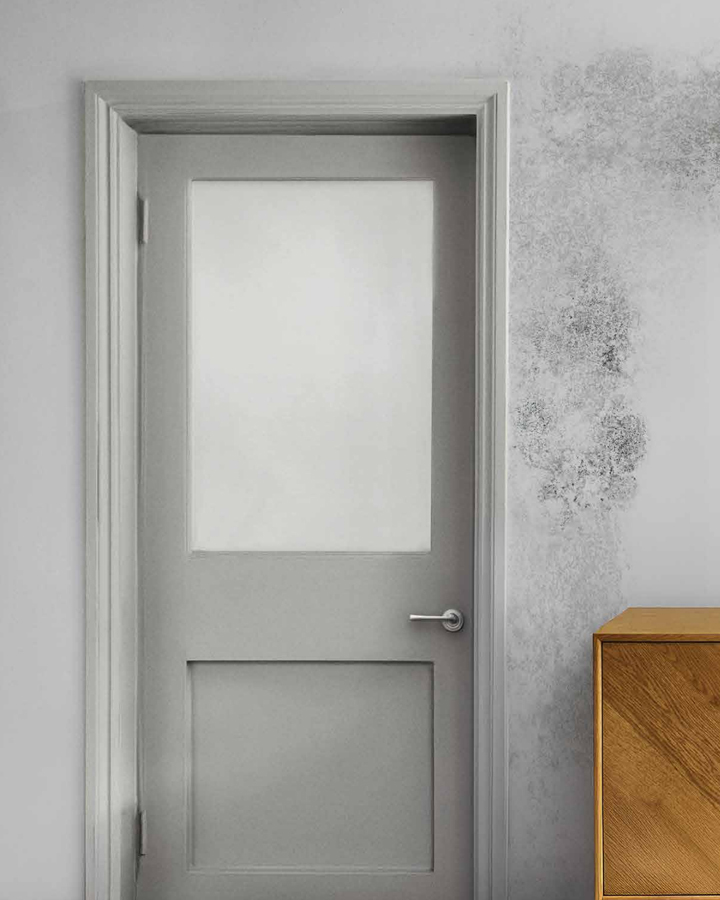
According to the Regulator of Social Housing, fewer than 0.2% of social homes experience the most severe damp and mould problems. It’s estimated that a further 1–-2% of homes face serious issues, while another 3-4% have notable damp and mould concerns[1]. Older buildings without adequate damp-proofing are particularly prone to these challenges, making it crucial for social landlords of older properties to be prepared to tackle them.
Mould is a form of fungus that releases toxic spores and vapours into the air. As such, damp and mould aren’t just cosmetic issues; they are public health risks that can have a serious impact on the tenant’s health and wellbeing. Whilst mould causes risk to everyone, it is particularly dangerous for vulnerable individuals like children and those with weakened immune systems.
If left untreated, damp and mould can also significantly damage buildings by weakening their structure and causing materials like wood and plaster to rot and decay. Not addressing these issues quickly can lead to expensive repairs down the line, so it is essential to identify and address them promptly and effectively.
 How to treat damp and mould
First, social landlords must identify and address the root cause of the damp as without doing so, mould will return over time. They should work together with contractors to carry out a thorough investigation to determine the cause, which could be issues like excess condensation, water ingress or structural faults. Only once this is resolved should surface treatments begin.
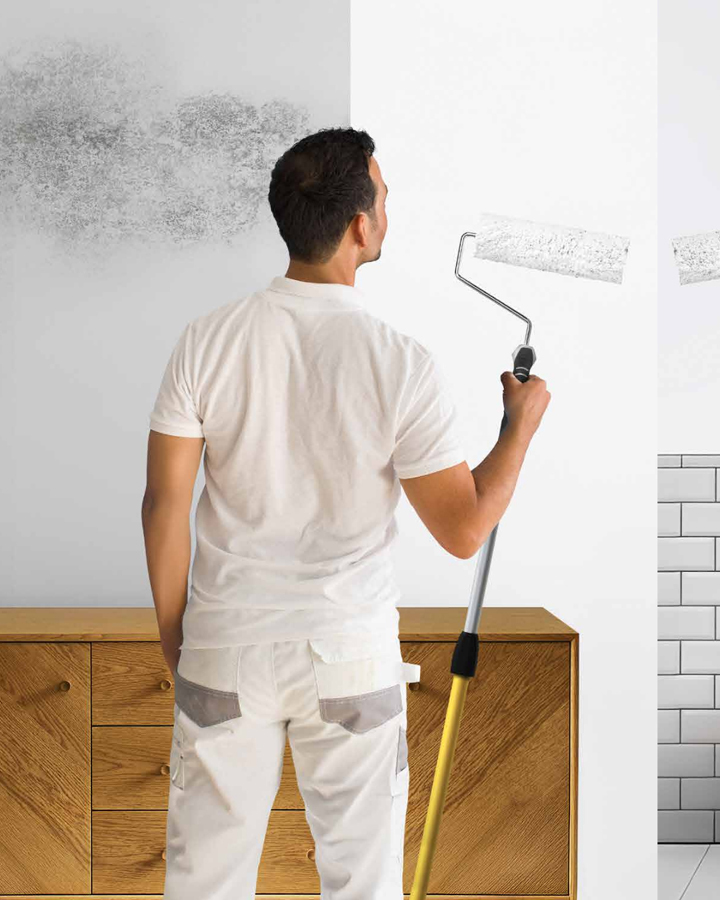
Once the source of the damp and mould has been resolved, the next step is to remove any existing mould and treat the surface to prevent it from returning. This should be done using a specialist wash such as Dulux Trade Weathershield Fungicidal Wash or Polycell Mould Remover that are specifically designed to kill spores and prepare surfaces for repainting. During this process, it is important for contractors to wear appropriate personal protective equipment (PPE) to prevent contact with or inhalation of harmful mould spores.
Once the mould has been removed, treated and the surface is dry, the area can then be painted over. A stain-blocking primer should be applied first, to prevent mould and damp stains from bleeding through the new paint and impacting the finish. A multi-functional product like Dulux Trade Aqua UniPrimer that offers a primer, sealer, stain block and undercoat in one advanced formula is ideal, as it can help to save time. This product is suitable for all major interior and exterior surfaces, and means that only one, quick-drying product is needed before applying the topcoat.
The final step is to apply a durable topcoat that actively works to prevent the recurrence of mould. For example, the paints in the Dulux Trade Mouldshield Fungicidal range contain a special fungicide in the paint film that helps to inhibit the growth of mould and fungi over time.
The range includes both Dulux Trade Mouldshield Fungicidal Matt and Dulux Trade Mouldshield Fungicidal Eggshell finishes that are available in a wide variety of colours to suit different interior environments. For high-moisture areas such as kitchens and bathrooms, the Eggshell variant is recommended due to its enhanced moisture resistance.
With Awaab’s Law now in effect, social landlords should ensure they are equipped to meet the new regulations. Taking timely action to identify and remedy potential hazards will protect tenants and maintain properties to a higher standard.
1 Regulator of Social Housing (2023) Damp and mould in social housing: Initial findings, GOV.UK. Available at: https://www.gov.uk/government/publications/damp-and-mould-in-social-housing-initial-findings
Find out more about how Dulux Trade can support your next project here.
Header image: ©JulietPhotography/AdobeStock