
Leading health technology providers Everon Group and Howz have launched a new whitepaper revealing that disrupted sleep is strongly correlated with increased fall risk, reduced resilience and wider deterioration in wellbeing.
The report demonstrates how wearable and telecare technology can detect meaningful changes in sleep patterns, including reduced sleep duration, increased night-time wakefulness and disrupted routines which are often early indicators of heightened fall risk or emerging health decline.
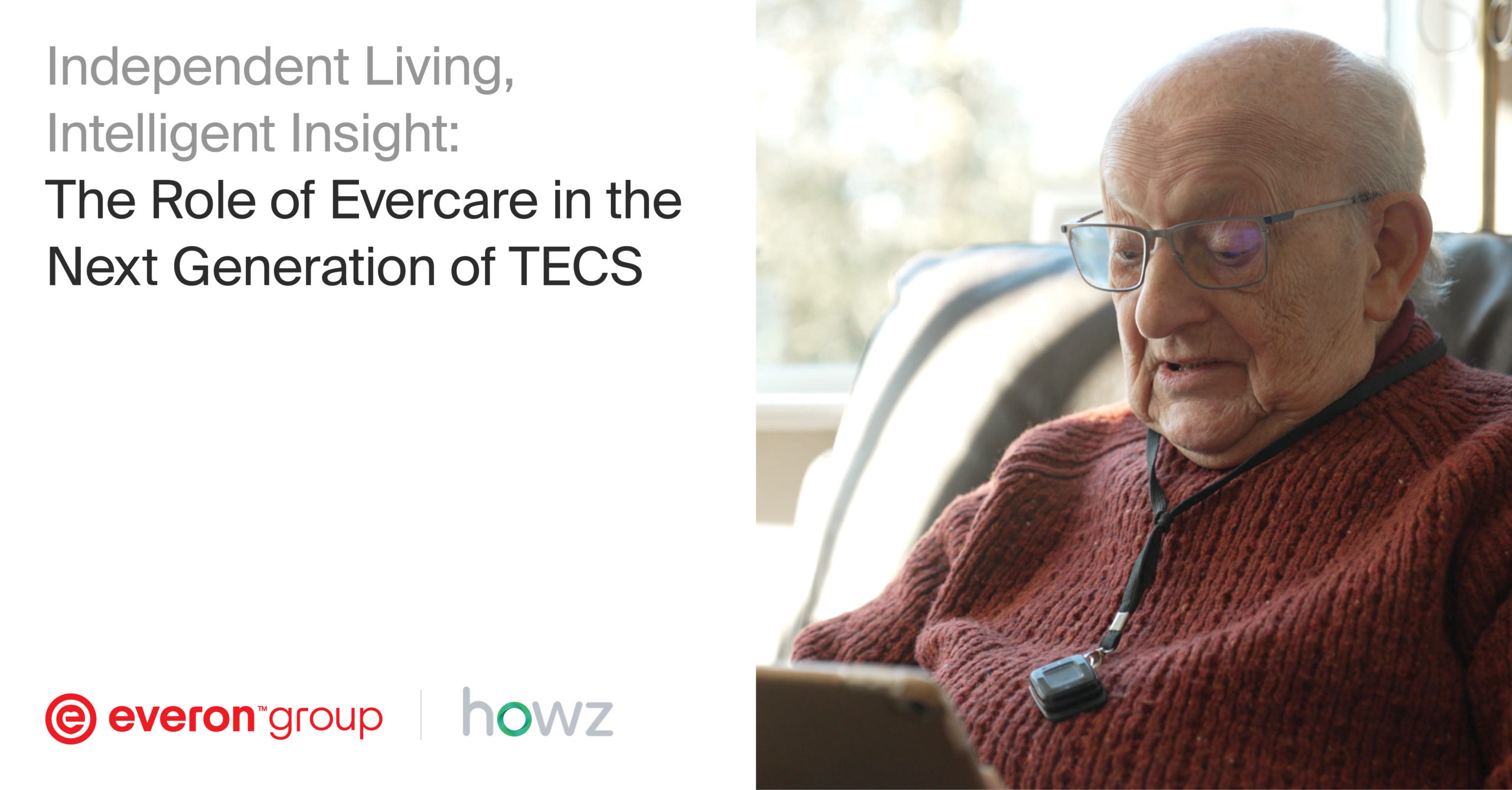
The report, ‘Independent Living, Intelligent Insight: The Role of Evercare in the Next Generation of TECS’, highlights how wearable technology and machine learning analytics can transform reactive telecare into a proactive, preventative model. The study demonstrates that continuous monitoring of routines, mobility and sleep patterns can provide early warning signs of health or wellbeing decline, allowing timely intervention before incidents occur.
Supporting the report, Everon and Howz have launched a new digital service, named Evercare, to the market. Evercare provides round-the-clock behavioural analytics with data drawn from wearable technology including the accelerometer and pendant, which allows care teams to identify anomalies in behaviour, assess risks and act accordingly.
Sleep is a powerful indicator of health and its disruption is closely linked with falls, cognitive decline and reduced resilience. Poor sleep significantly increases the risk of falls, which currently cost the NHS an estimated £2.3b each year. With an aging population, this financial and human burden is set to rise, yet many falls are preventable through timely, targeted interventions that address underlying causes.
 The new report sets out a series of recommendations for government, local authorities, housing providers and health services, including:
- Embedding digital innovation at the centre of housing, health, and social care reforms to implement a prevention-first approach.
- Clarifying responsibility and accountability for data and care outcomes across NHS, local authorities and housing providers.
- Investing in interoperable systems that allow existing TECS devices to generate actionable insights without replacement.
- Using real-time analytics to detect changes in routines, mobility and sleep, supporting early intervention and improved wellbeing.
The report also highlights the critical role of housing providers in bridging home, health, and social care. By using data-led insights, staff can identify residents at risk, coordinate with health partners and provide personalised support while maintaining independence.
Peter Kerly, Managing Director at Everon UK, added: “As the UK moves towards a fully digital communications network, the potential to deliver truly proactive and preventative care is unprecedented.
“Our work with Howz has shown that it is now possible to identify meaningful changes in behaviour from data already generated by existing devices and that these changes correlate with key risks such as poor sleep, reduced mobility and falls. This creates a powerful opportunity for services to intervene earlier and support people to remain independent for longer.”
The report demonstrates how wearable and telecare technology can detect meaningful changes in sleep, mobility and daily routines, providing early warning signs that enable providers across housing, health and social care to intervene proactively. By shifting from reactive responses to predictive insight, services can identify risks earlier, prevent avoidable incidents and support older adults to remain independent for longer.
Kate Fairhurst, Managing Director at Howz, said: “The findings from the report highlight the transformative potential of data-led care. By identifying meaningful shifts in behaviour early, services can respond before an incident occurs rather than after. In practice, this enables teams to adjust support, contact a family member, or intervene clinically at the right moment.
“The Evercare proof of concept shows that these indicators can now be derived from data already generated by existing wearable and pendant devices, with significant implications for both cost-effectiveness and scalability. This enables care providers to act proactively, adjust support, and prevent avoidable incidents such as falls, ultimately helping older adults maintain independence and wellbeing at home for longer.”
By tracking key indicators such as sleep, mobility and nutrition, Everon and Howz together enable early intervention, support wellbeing and help older adults maintain independence at home for longer.
The report underscores that the future of care is preventative, technology-enabled, and person-centred, providing a roadmap for how digital innovation can support older adults to live safely and independently at home for longer, while reducing pressure on hospitals and social care services.
To download a copy of the new report, please visit: everon.net/blog/independent-living-intelligent-insight-the-role-of-evercare-in-the-next-generation-of-tecs/
To hear more about Evercare, please visit: everon.global/solutions/howz/.